Mobile Fish Camp Shakedown Cruise: The Fishing–Act 2

June 2024

My trip to the Cochetopa Creek/Dome Lake State Wildlife Areas continues with a day on Lower Archuleta Creek and another day hunting for trout upstream in the tributaries of Cochetopa Creek. For Act 1/Days One and Two see http://hooknfly.com/2024/06/24/mobile-fish-camp-shakedown-cruise-the-bad-the-good-and-the-fish-in-two-acts/

Day Three:  Lower Archuleta Creek

I am up early the next morning to greet Mr. Sol.  I am anxious to try the lower section of Archuleta that has been good to me in the past.  But with the temperature in the low 40s and the wind still kicking up, I judiciously decide to await the warming rays of the sun to do their job. 

Sunrise Over Campsite And Upper Dome Lake

By 9:00 a.m. things are looking better, and I strike out.  I wave to my Florida white pelican fan club as I cruise around Upper Dome Lake and then head downstream on CR NN14.  I pass the turnout where I reconnoitered yesterday and continue another quarter mile or so where I park on the side of a wide spot in the road.  Soon I am suited up in my waders, and today I carry two rods, the 4# rod rigged with the just the Royal Stimulator that has been a hit with the trout and the shorter 3# rod with a #16 Royal Trude and a sparkle caddis larva dropper just in case they aren’t hitting the dry today. 

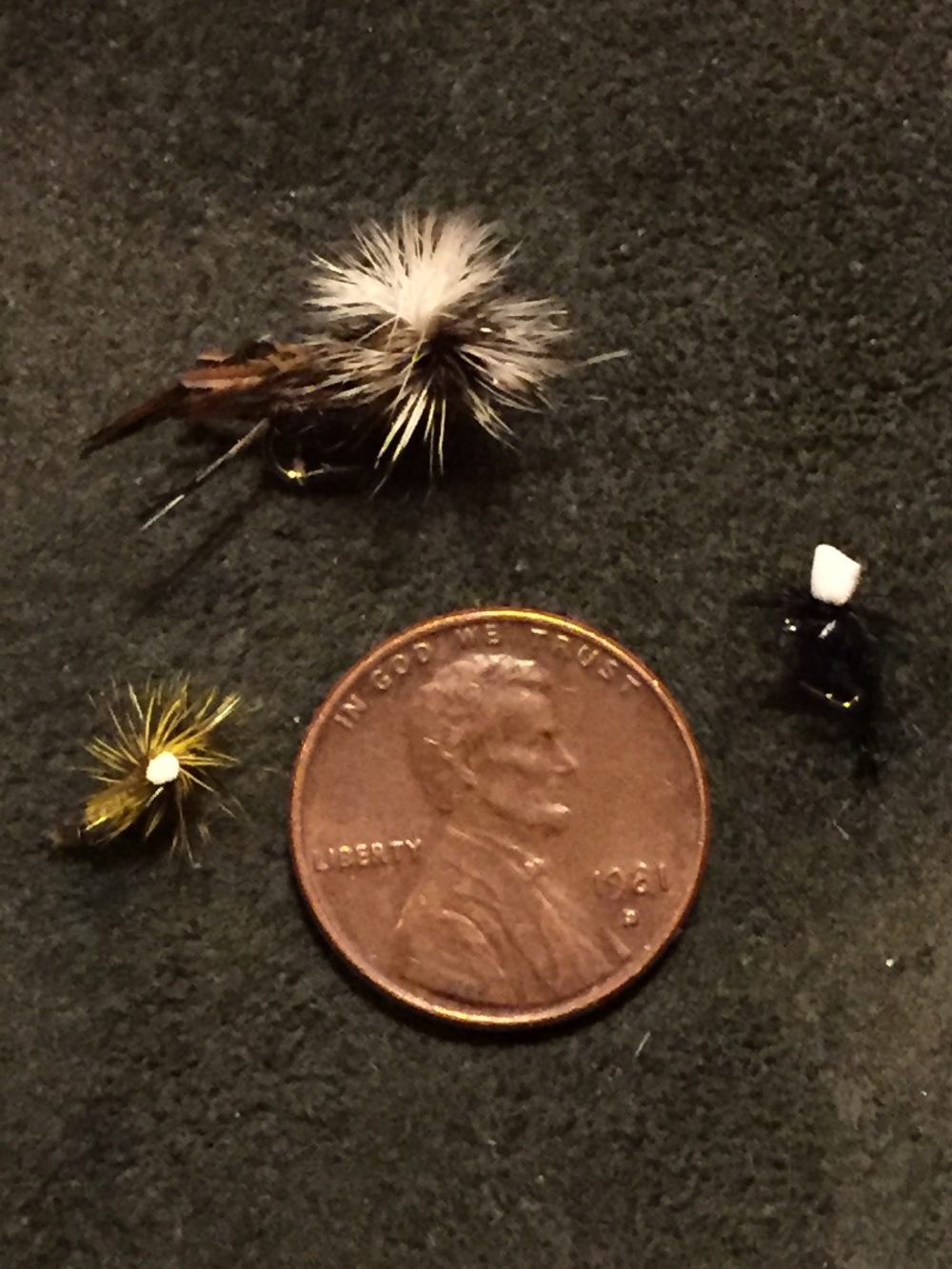
Day Three; The Chosen Three Flies–Royal Stimulator, Chubby Chernobyl, And Sparkle Caddis Larva Nymph

I slide down the steep bank and begin to gracefully tiptoe through the barbed wire fence that is tilted at a precarious angle just barely off the ground.  My long legs should have no problem I think as I step adroitly over a couple of strands.  Soon I am congratulating myself on my gymnastic ability, but then I notice a rip in my waders about knee high where a sharp barb has done its silent dirty work. Grrrr!  The rip is about a half inch long, indicating the potential for wet socks in the not-too-distant future. 

Barbed Wire Artwork

Shaking off this inauspicious start, I head downstream through the boggy terrain to the confluence of Archuleta with the larger Cochetopa Creek.  While I know Cochetopa is high, I am not prepared for the turbulent, raging torrent that greets me. 

Confluence Of Archuleta (on left) And Cochetopa Creeks

I have often waded easily across Cochetopa just below the confluence, which would now be a risk of life adventure.  The good news is that the wind has died down a bit and while annoying from time-to-time today, casting won’t be a major hassle.

I unfurl the 4# rod and flick the Stimi upstream into a quiet pocket in Archuleta Creek just above the confluence.  Pandemonium ensues as a dozen or more fish hiding in the pocket spy me and start darting in and out of their hideaway.  I had gotten careless and didn’t kneel or stand back from the bank.  After a period of self-flagellation, I calm down, kneel down, and flick my fly 20 feet upstream into a nice run below a riffle. 

Looking Upstream On Archuleta Creek Above Confluence

A substantial brown trout gulps down the Stimi like he is starving, no hesitation whatsoever.  Two more follow in quick succession.  The action is fast as I continue upstream, but I must move cautiously as the water is crystal clear.

I come to a long shallow stretch and am about ready to cross over the stream to get a better casting angle at the upcoming bend pool when I see something big rise and gobble something down against the opposite shoreline in a dark little depression no more than a couple of feet long.  My first cast is a flub, too far out in the thin current, but my second alights just a few inches from the shoreline, and my dry swirls into the dark spot.  The denizen pounces on the Stimi as I watch transfixed.  He disappears back into the shadow as I wake up and set the hook.  The trout erupts into the air and blasts off upstream.  My reel is screaming as I bail into the water in hot pursuit.  Trout are scattering every which way in front of me as I apply the brakes and force the muscular brownie to reverse course.  Before long I ease him into my net.  He goes a tad over 16-inches, a nice trophy in this small water. 

I release the handsome fish, then decide it’s time to enjoy the scene and have a little snack.  Beautiful yellow wild sweet peas are blooming in profusion along the bank, and wild iris dot the wet meadow. 

Wild Sweet Pea Carpet The Wet Meadow

I spot some pronghorn grazing up above on the slopes of the Cochetopa Dome.  All is framed by a brilliant blue bird Colorado sky.  But before long the next bend pool beckons.  

I decide to try the dry/dropper rig, and catch a few on the sparkle caddis larva, but the Stimi continues to rule. Another bend pool looms ahead, but this one will be tricky as a couple of overhanging bushes will demand a pinpoint cast to drop the fly into the current along the far shoreline without getting snagged.  I carefully gauge the distance, execute a couple of false casts, and send the dry to alight daintily right in the upper bush.  I utter a few expletives, but instead of jerking the line hard, a give it the lightest of tugs, and the fly falls delicately right into the honey hole. 

Brownie Bush!!

It immediately disappears in a small geyser of water as another big brownie dines noisily.  The trout bores deep into the hole, but I manage to ease him away from the snags and soon he relents, a 15-incher. 

Bush Brownie

It’s approaching noon by now and my stomach is growling, but I decided to fish another pool before breaking out the beef stick, granola bar, and peanuts.  There’s a riffle midstream above that cascades into a good-looking pool with some depth.  I throw my cast upstream of the riffle and watch the fly bounce jauntily through the turbulent water.  Then it disappears in a swirl.  I raise the rod quickly and the fish is hooked.  It’s a chunky brook trout, the first I see today. 

Chunky Brook Trout Add To The Fun

I continue fishing post snack until about 2 p.m., when I come to the stile below the turnout.  It’s taken me a good four hours to work only about a half mile of intriguing winding water up from the confluence.  As I scramble up the slope to the road, I turn and tip my hat to the wonderful waters of Archuleta Creek.  Later this afternoon I will be heading to Gunnison to gas up the SUV for the trip tomorrow and partake of my annual chicken fried steak dinner there. 

Day Four:  Exploring Four Fine Finny Tributaries of Cochetopa Creek

With Cochetopa Creek blown out, running at over 130 cfs, I decide to devote my last day of fishing exploring one of its major four tributaries between my campsite on Dome Lake and the Eddiesville South Trailhead 20 plus miles upstream to the west—Pauline, Perfecto, Chavez, and Nutras Creeks.  Several have good meadow sections, but I am particularly interested in checking out the big beaver ponds they harbor, all of which have been productive on past trips.  Can you figure out which one I choose??

I am up early and on the road by 8 a.m.  I drive up CR 14DD, the Eddiesville Road that once was a major route over the mountains to Lake City and other booming gold and silver mining areas in the 1870s.  I am in my 4WD SUV, but the road is usually in good enough condition to be negotiable by a sedan—except after heavy rains. 

I start out being treated to an incredible sight of thousands of sheep moving across a meadow of the Quarter Circle Ranch, replete with a sheep wagon that houses the flock’s sheepherder. 

Soon I cross the bridge over raging Cochetopa Creek and then a hundred feet further on the brim-full Pauline Creek just above the confluence of the two waters.  Then it’s up a steep uphill where I am greeted by a couple of pronghorn bucks grazing nonchalantly in a meadow. Before long I come to the turnoff to Pauline Creek canyon where I have had good days on some big beaver ponds. 

Turnoff To Pauline Creek Canyon

I decide to continue, thinking maybe I will come back later after my recon is complete.  Soon I dip down into the valley above the canyon and cross the upper stretch of Pauline which is running hard but clear. 

Pauline Creek Running High And Fast

A few miles further up the road I am treated to magnificent views of the snow-covered peaks of the eastern San Juan mountains—San Luis at 14,022 feet and Steward at 13,983 feet.

San Luis Peak–A Fourteener

Then I drop down into another valley where I see the enticing beaver ponds of Perfecto Creek but keep going.  Before long I cross Chavez and Nutras Creek, both looking good with strong, clear flows and featuring some alluring beaver ponds.  What’s an angler to do?? 

I ponder a bit then head to the chosen creek.  I turn off the Eddiesville Road onto a rough two track that leads to a ridge overlooking the curvaceous creek below in a broad valley.  I suit up and start the descent, heading downstream where I know there are a series of five big beaver ponds that harbor 20-inch brown trout.   

I follow a game trail on the west side of the valley that soon narrows, now flanked by some impressive rock walls with steep pine covered slopes across on the east side.  I get a nice early surprise when I look down and see a new beaver pond with signs of recent activity courtesy of the wizards of gnaws.  I decide to catch it on my way back upstream after hitting the big beaver ponds below. 

Enticing New Beaver Pond

I feel the joy of wilderness and solitude as I continue on.  There isn’t a boot mark on the narrow game trail, only hoof prints of deer, antelope, and maybe moose.  The aspen are just popping, spring coming late in the high country.  Showy wild iris are blooming wherever there is a wet spot along the trail.

Suddenly I hear the clatter of hoofs up above the trail and turn just in time to see two big buck pronghorn skedaddling the opposite direction.  I do my best imitation of a crow, and that stops one of the curious boys in his tracks.  He turns slowly to size up the intruder.  I smile and snap a couple of photos as he slowly walks closer.  I ask him how things are going.  He wheels and jets away. 

The trail edges higher up the slope and gives me a glimpse of the five beaver ponds stair-stepping down into the canyon.  My fishing fever is boiling over as I step up the pace.  In a half mile I am above one of the ponds and bushwhack my way down to the water, but a big surprise awaits.  There’s a major gap in the dam where a flood has blown it out.  The water in the pond is barely knee deep, and I don’t see a fish anywhere.  I make a few casts here and there where the water looks deeper, but it’s no dice.  So I work my way upstream to the next dam where the scene is repeated.  This one is a real heartbreaker–when I last trekked here five years ago it was one of the most scenic beaver ponds I had ever seen, complete with a picturesque lodge.  And I had caught a 20” brown standing on the dam that is now breached in a couple of spots.  Nary a fish is in sight as I wade up the current throwing a cast here and there with little hope. 

It takes me almost hour to work my way back up to the first pond I had spotted at the start of my hike that looked to be of recent construction.  Three other ponds had met the same fate as the lower two, gaps ripped in the dams leaving very little holding water.  I had failed to spot a fish the whole time, either in the leftover puddles or creek stretches in between the breached dams. 

But then I see a rise in the new pond–hope springs eternal.  I decide to forego lunch for the time being and navigate down the slope to the water.  I wade in carefully between the trees and brush that appear to have been inundated only recently. 

The bottom is unusually firm for a beaver pond, another indication that the dam is fairly new.  I choose my shorter rod that will make it easier to avoid all the limbs and branches around me when casting and flip out the Stimi/sparkle caddis dry/dropper rig a few feet while adjust my drag and lengthen my line.  WHAM, something immediately gulps down the caddis dropper and tugs away.  Of course I miss the eager fish, but I can’t help chuckle.  I wade out a tad further and flip the flies upstream into the inlet flow.  Immediately the dry is yanked under as another fish eats the caddis dropper.  It’s a frisky brook trout pushing 12 inches.  He jumps and dives, but eventually relents.  The first fish of the day, the skunk vanquished.  I quickly release and reload and this time another brookie, a bit smaller, nails the dry.  Then another. 

Eager Beaver Pond Brookie

I throw a couple of long casts across the current down towards the dam where the water appears darker and deeper.  I slowly coax the flies back into the current and watch a bigger brookie poking after the dry, but he won’t take.  I also see a couple of rises by the dam but can’t reach the spot from this angle because of all the intervening trees and bushes.  Beaver ponds are never easy!  If I want to reach that sweet looking water I will have to wade across the inlet stream above, navigate around some bushes at the upper end of the pond, clamber up a steep slope around a thicket, then slide back down to the water near the dam.  Exhibiting some impressive septuagenarian gymnastic moves, I succeed in navigating to the opposite side of the pond with only minor scratches and bruises.

The water is indeed deeper on this side as discover when it laps at my waist only 10 feet from the shoreline. I decide to rerig my 4# rod with a beadhead olive wooly bugger with a Psycho Prince dropper.  The weighted olive bugger will make sure the flies get down deep where I suspect the bigger fish are hiding.  And they are.  On the first cast towards the dam, I let the flies sink to the count of six and something immediately intercepts with a light tug before I start the retrieve.  I miss connecting.  It takes me awhile to get the hang of it with these fish, but soon a nice almost foot-long brookie is coming to the net, having succumbed to the allure of the Psycho Prince. 

I have to be ready to set the hook whenever there is the slightest tug or even just a momentary tightening of the line.  Oddly for brookies, only a few strikes are hard and bold.  The brookies seem to like both the wooly bugger and prince equally, and before long I have caught and released more than a dozen of the spunky fish, including a couple of bigger ones. They were hiding in the deeper water that was flowing across the face of the dam to the outlet at the east corner of the pond.  Interestingly, I don’t catch any brown trout that used to dominate the ponds in the canyon.  Washed away in the floods that breached the dams??

It’s early afternoon now and my thoughts are turning to the cold RC Cola back across the pond in my little cooler bag.  I start working back across the pond and pick up a couple more brookies at the inlet stream on the Stimi and sparkle caddis larva. I also spot what looks to be a beaver lodge in the early stages of construction amongst a tangle of flooded trees.  Freshly cut branches litter the ground around it.  I have never seen a lodge built in such a concealed location and will be interested to see what it looks like the next time I am here and the beaver have completed their new home.

Beaver Lodge Under Construction

The sun is hot now, and I climb towards a cliff on the west side of the canyon that will provide a some welcome shade.  On the way up I run into two grasshoppers making whoopie.  It seems early in the season to see hoppers, but I decide after lunch I will try a Chubby Chernobyl dry fly in the meadow above the canyon.  The little nook in the cliff turns out to be a good spot to relax, with a peaceful view up and down the valley and a bonus of rock art work thanks to a colony of fungus. 

After lunch I continue upstream along the trail for five minutes then cut down to where I can hear the creek gurgling and gushing.  I get lucky and emerge just below a narrow section where the remains of a beaver dam have backed up water in a nice pool below a bend in the creek.  I start to cast and out of nowhere a mama moose and two calves come crashing out of the thicket of willows and bushes just above the pool.  Fortunately, the big mama decides to run away upstream rather than confronting the intruder.  I wait a few minutes to let my nerves settle, then aim a cast at the head of the pool where the current spins in.  A nice brook trout nails the Chubby and puts up a scrappy battle.  I get a few more looks and flashes in the pool, but no solid hits. 

I ease around the pool and start casting upstream in the rushing creek.  Fortunately the Chubby is so buoyant that it floats like a battleship and is easy to see with its big white wing.  Apparently the fish can see it as well because a burly brown laying in a foam line below a riffle smashes the fly.  It’s a respectable 13-inch fish and will be the only brownie I catch all day.  The brook trout have taken over since my last visit!

Lone Brownie Surprise

I continue to pick up brookies here and there as I emerge from the canyon, out of the thicket, and into a broad meadow.  I have been singing loudly the whole time to make sure I don’t surprise the mama moose, which can be exceedingly truculent when protecting their calves.  My ditty went something like this (to the tune of Be Kind To Your Fine Feathered Friends Cause a Duck Maybe Somebody’s Mother):  “Be kind to your silver-haired friends, because an old codger may be somebody’s grandpa.”  Well definitely not a top 40 hit, but it scared the mama moose and her babies out of the thicket, into the open, then tearing back down the valley.

I continue into the meadow which is sop and wet from the creek which is overflowing its banks in spots from the runoff, but still fairly clear and fishable.  The meadow is carpeted with wild iris and striking white marsh marigolds. 

I approach the first bend pool stealthily and using my #3 weight short rod with only the Chubby dry fly cast from my knees.  The faux hopper swirls into the deepest part of the pool and is promptly wolfed down by a hungry brook trout that goes about 10 inches.  Over the next half hour another dozen or so scrappy brookies cannot resist what looks to be a good meal. 

However, nary a brown joins the feast in that pool and several that followed upstream—a stretch that produced many just early last summer.  I am still puzzling over that.  I am contemplating spending another hour on the stream when I hear some thunder coming from the dark clouds that have scudded over the mountains.  A few drops of rain start to fall, so I decide I better hightail it back to the SUV just at the top of the hill.   The wind kicks up but the rain doesn’t amount too much.

Rain Clouds And Thunder Threaten But Pass On By

Soon I am back on the Eddiesville Road heading to camp.  On the way I admire the lupines that are showing their colors all along the road, and right on que another antelope scoots into view to bid me adieu.

 It’s been a relaxing and fun four days, notwithstanding the rookie-type mistakes with the mobile fish camp. The angling Gods have been beneficient.

Mobile Fish Camp Shakedown Cruise:  The Bad, the Good, and the Fish In Two Acts

June 2024

For Fishing Act Two, see https://hooknfly.com/2024/07/02/mobile-fish-camp-shakedown-cruise-the-fishing-act-2/

Prelude:

I am back in Colorado getting ready for another trout fishing season.  I have fished for more than six decades, starting with catfish and bullhead in Kansas rivers and graduating to bluegill and bass on a fly rod in lakes then to trout.  The mobile fish camp of the day with my Dad was a hulking blue 1951 DeSoto car. 
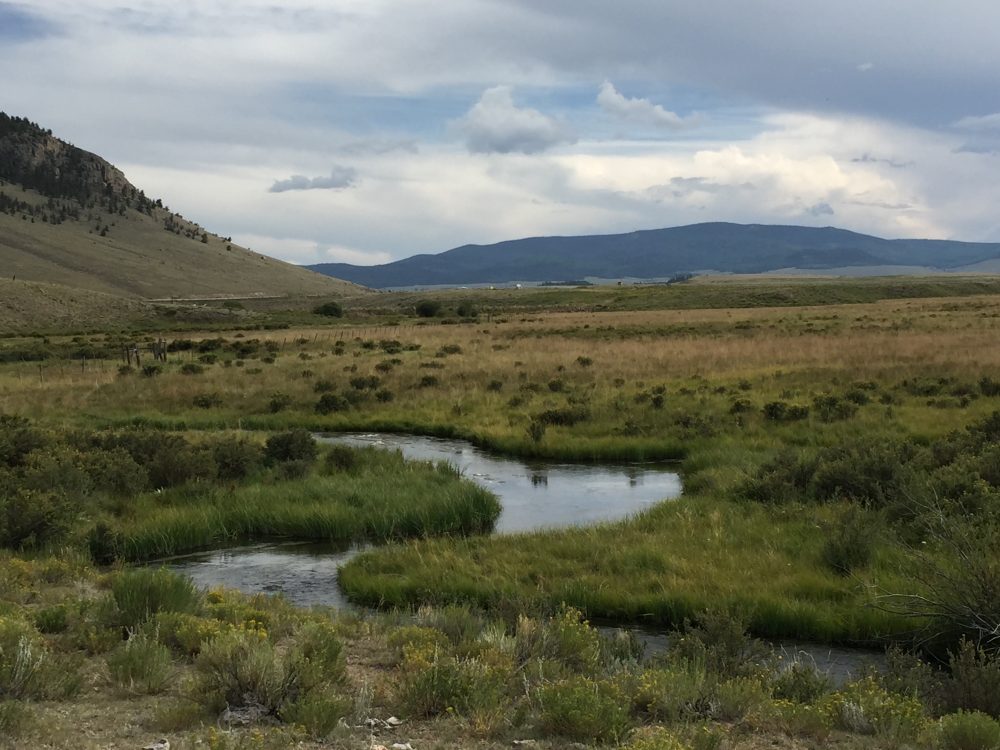
Dad would sleep in the front seat and me in the back seat on a special platform he built over the huge drive shaft hump on the floor.  Great memories as we explored the rivers and lakes of central Kansas. 

Getting ready for those trips–gathering our gear, bedding, food, and other paraphernalia–was something akin to a religious ritual.  It felt even more so that way now as I loaded up my little travel trailer for dry camping in the boondocks of the Rocky Mountains.  Of course, being June most rivers around my cabin near Salida are blown out and the high mountain lakes are still iced in.  I have already tried the local beaver ponds with reasonable success, but I am now itching to try some new waters, and maybe even find a creek that’s fishable or some new beaver ponds.  With my little sweetheart granddaughter Aly and her daddy Matthew off to Las Vegas to visit family there, I have some time on my hands and decide to take a chance and explore.  With a Yuengling Amber Beer in hand, I sit on my front porch near Salida, Colorado, and contemplate my options. 

A tailwater creek or river would be a viable option during runoff as the flow would be more controlled and the water clearer.  One with some big beaver ponds in the vicinity would be a bonus.  Central and southern Colorado where I do most of my angling has several famous tailwaters below big lakes like the South Platte flowing out of Antero and a series of other reservoirs, the Blue River below Dillon Reservoir, and the Arkansas River below Pueblo Reservoir.  But those waters with their relatively easy access and proximity to big population centers are typically overrun with anglers during runoff.  Not my cup of tea.  But there are other options further south and west like La Jara Creek below La Jara Reservoir (near Alamosa), Grape Creek below Deweese Reservoir (near Westcliffe), North Clear Creek below Continental Reservoir (near Creede), Tarryall Creek below Tarryall Reservoir (near Lake George) and Archuleta Creek below the Dome Lakes (near Gunnison).  Several of them also feature productive beaver ponds nearby. 

 After some digging and rumination, I chart a five-day trip focused on the contiguous Cochetopa and Dome Lakes State Wildlife Areas about 75 miles southwest of my cabin and 45 miles southeast of Gunnison.  I have camped and fished this area before. 

It is remote, but not too remote, high but  at “only” 9,500 feet not so high as to be iced in, very scenic and it’s unlikely there will be many anglers around this early in the season.  The gravel roads in the area are usually in good condition, and Gunnison is only 45 minutes away in case I need fuel, food, or whatever. Little Archuleta Creek flows out of Lower Dome Lake, a true tailwater that joins Cochetopa Creek a mile or so below the dam.  Several tributaries of Cochetopa Creek above the Dome Lakes also sport some excellent beaver ponds. 

 I figure it will be good preparation for more ambitious trips in the July-to-October prime trout season in the Rockies.  I can get everything organized and in ship shape—the proverbial shakedown cruise. 

Getting Ready For Shakedown Cruise

I can avoid problems later when in the wilds.  As it turns out, it was a good practice run as I made some rookie mistakes that could have been real disasters in the more remote backcountry.  Here are a few I can laugh at now, especially since the fishing, the description of which follows a summary of these memorable rookie mistakes, was excellent!

Rule #1:  Always thoroughly test the trailer water, propane gas, batteries, and solar panels before you shove offDouble check the gas! I dutifully drained the antifreeze in the water system on my travel trailer, flushed it out and refilled the water tanks.  I tested the new water pump, and it hummed efficiently.  Next, I filled the propane tanks and carefully tested each of the three gas burners on the stove.   They all functioned perfectly, and then I ran the gas furnace and checked the gas connection that would run the little refrigerator.  The batteries were next.  I charged them up and tested the solar panel that would keep them humming in the boondocks, allowing me to have light in the trailer and recharge my cell phone after the daily quotient of photos of the scenery, wildflowers, wild animals, and big fish.  After all that activity, I retired to the front porch to enjoy the view and have a glass of wine.

I was admiring the Western Tanagers, Black-Headed Grosbeaks, and assorted hummingbirds on the bird feeders when I heard a cheeping noise coming from out back beyond the trailer among the pinon trees and sage.  Maybe a new bird for my list??  I crept quietly around the cabin in the direction of the cheeping but couldn’t see anything.  The chatter continued.  I slyly pulled out my cell phone and opened the Merlin bird app from the Cornell School of Ornithology and held it high in the air.  It identifies birds by their calls.  I could tell the app was struggling, but it finally identified the call of a spotted towhee, a shy bird that frequents the area.

Next morning when I awakened, I heard the phantom towhee who was continuing to cheep merrily away.  After finishing breakfast, I snuck outside to see if I could spot him.  Then I realized the call was coming from my travel trailer.  I opened the door and sure enough a little black box near the floor under a window was sounding off.  I unplugged the device and found it was a propane gas detector. 

Little Life Saver

But there was nothing using gas on in the cabin.  The note on the box said it should be replaced every years, and my trailer just turn seven, so I thought it must be defective and was ready to toss it into the trash when I happened to glance over to the stove….and saw that one burner was not fully off and not lit!  It was turned to the lowest setting when I tested it, but apparently I had not shut it off completely and it had been running all night long.  I quickly turned it off and bailed out of the trailer.  Since propane gas is odorless, no telling what might have happened if it had continued to slowly leak gas into the trailer and I had lit a match!  Yikes!!

Rule #2:  Always check the hitch, lights, tires, and inside of the trailer one last time after you drive it a short distance.  The driveway down from my cabin to the nearest county road is a tad rough.  I take it slowly and always stop at the bottom of the driveway just before turning onto the county road to check things.  Everything looked good from the outside, but when I opened the door, I was met by a river of white liquid that was oozing out of the refrigerator and across the floor to the door.  I tiptoed around the white flow and opened the refrigerator.  Inside was a frothing lake of white milk covering most everything.  Turns out I had not tightened the cap sufficiently on the quart milk box, and it proceeded to leak out over everything below it—lunch meat, fruit, tomatoes, corn on the cob, you name it!  AARRGGHH!  Quite a mess, but fortunately I caught it before it coated the entire frig interior not to mention the floor of the trailer. 

The Milky Culprit

Rule #3:  Double check the trailer brakes and 4WD before hitting the main highway.  As noted, my driveway is bumpy and steep, always reminding me to test the trailer brakes and put the SUV into four-wheel drive to slow the descent while give it a little test.  Unfortunately, in the hubbub over the spilled milk, I forgot to switch back into 2WD and proceeded to drive for 45 miles in 4WD at speeds to 60 mph before noticing my error.  The owner’s manual cautions never to drive in 4WD over 55 mph.  Luckily I appear to have dodged a bullet as the 4WD performed flawlessly throughout the trip in more suitable terrain at acceptable speeds. 

Rule #4:  Always set blocks under the trailer tires before unhitching from the SUV.   When I got to Upper Dome Lake where I would be camping in a state wildlife area, I was anxious to get on a nearby creek which appeared to be high but fishable.  I unlocked the trailer ball and cranked it down from the hitch receiver on the SUV.  I moved the SUV forward and went about leveling the trailer.  But before I could finish the job, a huge gust of wind, probably more than 40 mph, swept over the trailer and BANG, pushed the trailer jack/hitch off the block of wood it was resting on.  The trailer skidded forward a half dozen feet, coming close to crashing into the SUV.  I had to struggle for 30 minutes to get the trailer hitch jacked up high enough to reconnect it back to the hitch on the SUV and then maneuver the trailer back into position.  This would have been easily avoided by the simple act of setting the tire blocks first before unhooking the trailer.  Lesson learned. 

Set Those Tire Blocks First!

Unfortunately, I didn’t realize till later that the trailer jack had been damaged.  Fortunately the jack crank still worked, if barely. I was able to hitch the trailer up to the SUV when I headed home a few days later and get a new new trailer jack pronto.

New Trailer Jack $150 Later

Day 1—Archuleta Creek Headwaters

Surely things had to get better after this auspicious debut!!  And they did.  Although the wind continued to howl, blowing hard from the northeast at 20-30 mph, after a quick lunch I was able to find some shelter from it on the headwaters of nearby Archuleta Creek which lays in a wind shadow of the magnificent Cochetopa Dome.  The dome is a fascinating geological feature that dominates the valley.  It is the center of an extinct giant volcano that collapsed millions of years ago.  The caldera of the collapsed volcano, now a vast landscape of sage and prairie vegetation, was an incredible 20 miles wide!

Tiny Archuleta Creek arises from the hills of the Cochetopa Caldera to the south of Upper Dome Lake where it is dammed a mile or so down the valley.  It’s so small in its headwaters that even a septuagenarian can easily to jump across in places.  Surely there can’t be fish here.  Indeed over a period of 15 years exploring this area, I have never seen another angler on upper Archuleta—just bovine visitors grazing in the meadow.  But appearances are definitely deceiving.  The narrow runs between the big bends are often two-to-three feet deep, and the bend pools provide perfect habitat for the trout—brookies, browns, rainbows, and tigers.  Indeed, it is possible to score a mountain trout grand slam here in a day.  The casting under the best of conditions is extremely challenging and stealth is mandatory given the size of the stream.  The wind gusts were going to make things even more interesting. 

I park my SUV about a quarter mile south of the turn onto CR ­­NN14 that separates the creek from the backwaters of Upper Dome Lake. Before hopping over a low section of the barbed wire fence that parallels the road and heading downstream, I pause to soak in the beautiful scene—the majestic peaks of the rugged eastern San Juan Mountains in the background. 

Archuleta Creek Framed By The High Peaks Of The East San Juan Mountains

The terrain is soft and marshy.  I am wearing chest waders and carrying my wading staff, but hip boots would probably do as well.  I know from previous experience there are caddis in these waters, so tied on a #16 green sparkle caddis larva below a #16 Royal Stimulator that is a decent caddisfly or grasshopper imitation—although I don’t see any flies on the water or risers.  There is a smattering of small grasshoppers in the grass.

Three Flies Will Do The Trick All Week–A Royal Stimulator, Chubby Chernobyl, And Sparkle Caddis Larva

The water is high, but i, and only slightly discolored, with visibility at about one foot deep.  On my third cast a spunky brook trout inhales the dry fly as it floats down into a bend pool and puts up a worthy battle before sliding in my next for a quick photo. 

Brook Trout Starts The Day

That starts two hours of steady action as I move carefully upstream.  Soon in a narrow, deep run a bit further up, a colorful rainbow nails the caddis dropper. 

Neon Rainbow!

Surprisingly, most of the fish which run from 10-12 inches prefer the dry fly.  My audience of cows and calves do not seem to be impressed and trotted off insouciantly.  Before long, I come to an irrigation drop structure with a wide deep pool below it.  I cast to the top of the pool and watched as the dry floats jauntily in the foam line along the shoreline–before something big busts it in a showy splash.  It looks like a brown trout.  He cavorts around the pool but before long I am easing him towards the net as I think of the bragging I will be able to do over the photo with my fishing pals…until he manages to snarl the line on an unseen subsurface snag and twist off.  He is easily the biggest of the day, probably 15 inches.  My bruised ego is quickly salved, however, by a couple of 12-inch plus rainbows in the same pool that inhale the Royal Stimulator.  I fish upstream another 15 minutes or so upstream, catching a few more brookies, before deciding to call it a day.  I am tuckered out after all the trailer hi-jinks and the thought of taking it easy in a lounge chair with a libation while enjoying the views back at camp of Dome Lake and the Cochetopa Dome is irresistible.  So that’s what I do. 

Later, after dinner as the sun sets, I relish the changing colors on the Cochetopa Dome and the dancing colors as the sun sets to the west.  Not a bad first day.

Day Two:  Upper Dome Lake And Middle Archuleta Creek

I rise early the next morning, courtesy of the wind gusts shaking the trailer.  I peer out the window and see whitecaps churning on the lake.  This doesn’t look like a day for flyfishing to say the least, on either Upper or Lower Dome Lakes or the tailwater section of Archuleta Creek below.  To make matters worse, when I check my phone I discover that the USB charging port in the trailer isn’t working and my cell battery is perilously close to dead.  Damn!  How am I going to take photos of all those big fish and the wonderful scenery?? But wait, I remember I just bought a portable power bank that lets me recharge the phone on the go.  Congratulating myself on my perspicacity, I plug in the phone and in less that 30 minutes it is fully recharged, as if by magic. 

Power Bank–Don’t Leave Home Without One

‘The power bank will be a life saver, recharging my phone each night with enough juice left for one or two more.

But after the battery incident and in the face of gale force winds,  what does any self-respecting fly fisher do?  Tie some flies? Clean his fishing line? Pout?

Spin Fishing Heresy!!

Heck NO, he gets out is trusty ultra-light spincast outfit from a secret hiding place in the trailer, grabs a box of lures, and heads down to the lake where the dam provides a small shadow of quieter water.   I tie on an old-reliable silver/blue Kastmaster spoon, and the fun begins immediately. 

Old Reliable Kastmaster Spoon

I throw a long cast out to a spot where I see some swirls in the water, let it sink a few feet, then begin a herky-jerky retrieve.  As the lure nears the shoreline rocks, I see a silvery flash and feel a good hit.  I set the hook, and my rod bends perilously.  It’s a nice 13-inch shiny rainbow who takes to the air several times before coming ashore. 

Spunky Lake Rainbows Save The Day

He will be the first of a dozen or so cooperative bows that make for a fun and lively morning.  A flight of striking violet-green swallows adds to the scene as they dip and dart over the water, gobbling down tiny insects for breakfast.

Graceful Violet-Green Swallows Fly Over Upper Dome Lake Feasting On Lake Bugs

After lunch, the wind ebbs a tad, so off I go to fish Archuleta Creek below the dams, a true tailwater that is running a little high but crystal clear.  As I make the circuit around Upper Dome Lake in my SUV and then turn downstream, I am pleased to see my Florida White Pelican fan club has followed me up from the Everglades where I spend the winter chasing snook and tarpon.  They are clearly expecting to receive some fishy treats like a ladyfish or snapper that often nail our offerings down there.

White Pelican Fan Club From Florida

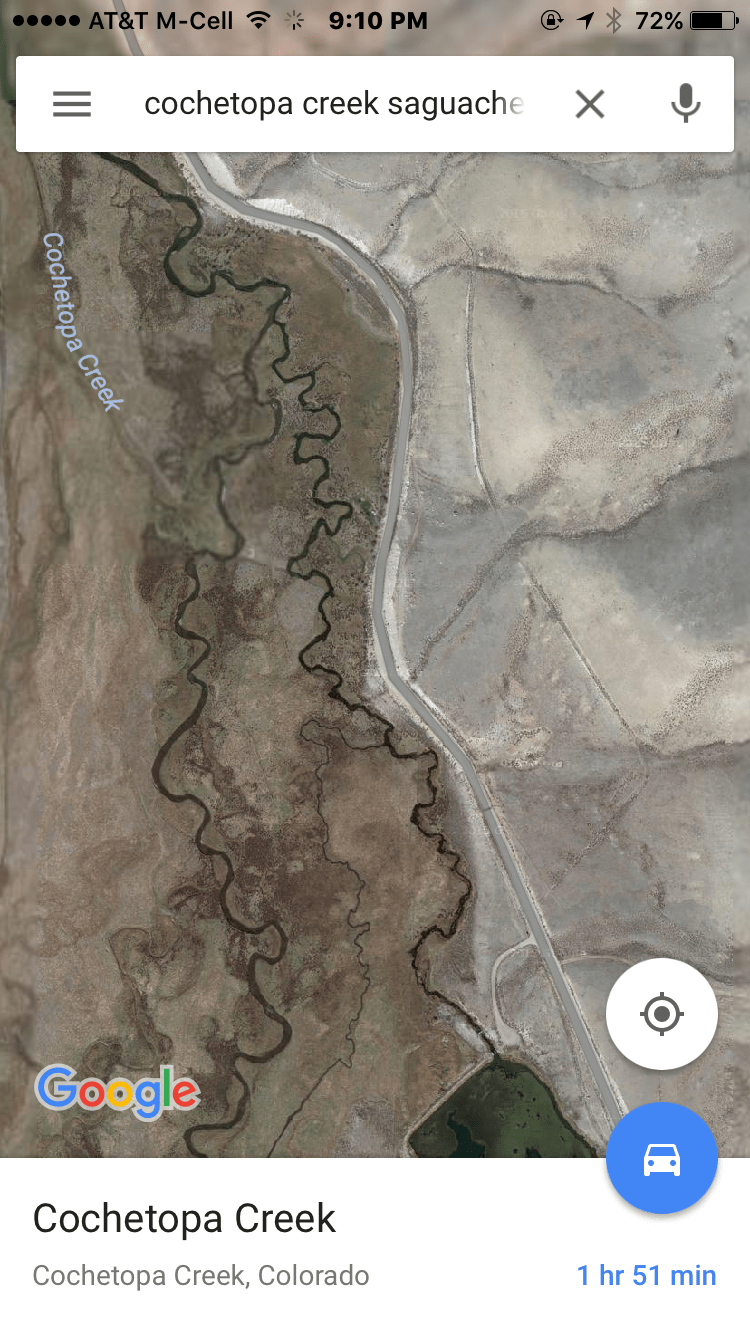
The Archuleta Creek tailwater can be divided into three sections.  The first extends about a quarter of a mile below Lower Dome Lake to a high barb wire fence a few hundred upstream of a turnout (Marked in red.) on CR NN14.  The middle stretch extends from the big fence past the turnout that is marked by an informational sign with fishing regulations.  Just below the turnout is a stile that allows anglers to climb over another barbed wire fence that parallels the road and then fish either upstream to the high barbed wire fence noted above at the bottom of the first stretch or walk downstream into the third stretch.  The third stretch starts about a quarter mile downstream from the turnout and continues to the confluence with Cochetopa Creek.  All three stretches are serpentine, marked by deep bend pools.

As I come to the turnout, I high am surprised to see another angler downstream who looks to be an older gent like me. Perched high above the creek, I watch him cast and hook a trout.  He continues working upstream, wading right down the middle of the creek with the grace of a water buffalo.  Even at a distance, I can see wakes of fish fleeing before him.  These tailwaters are crystal clear, with shallow runs interspersed with alluring bend pools. 

Stealth is mandatory, and I try to stay out of the water whenever possible.  Indeed, I often find myself kneeling to maintain a low profile when casting.  If you don’t, you will spook the fish in the shallow stretches hiding undernearth aquatic vegetation, and they will flee wildly upstream leaving prominent wakes as they alert their brethren to the intruder.

With the middle stretch occupied I opt to fish the upper section and turn my vehicle around and head back up to Lower Dome Lake where I leave the SUV in a parking area next to the lake.

Above Upper Stretch Looking Downstream

Then I hike downstream about a 10 minutes until I come to the imposing barbed wire fence that extends from the road to the creek, marking the upper boundary of the middle stretch.  I will work back upstream from here, giving the older gent plenty of room. It is about 2:30 p.m. as I approach the stream.  The tall hills to the northeast of the creek are providing some shelter from the wind.  That will make casting a little easier.  The water is a tad high, up in the shoreline vegetation in some stretches, but not too bad. The creek is crystal clear and registering at 62 degrees on my thermometer.  I see fish dimpling the surface.  As I prepare to cast, one spies me and jets downstream.  Slow down, I say to myself!  I let things calm down and then check some streambed rocks to see what the menu of the day looks like.  The rock is loaded with caddis cases.  I squeeze one and a little bright green larva appears. 

Looks like sparkle green caddis dropper time with the Royal Stimi on top. 

On my second cast to the bend pool above, a good fish intercepts the caddis larva and erupts into the air when I set the hook.  Soon a beautiful golden brown comes to the net, measuring almost 14-inches.  A good start. 

Gorgeous Golden Brown Starts The Action

The action is steady on both the surface and the dropper as I continue upstream.  The casting in this section can be tricky in parts as the creek winds in  and out of a barbed wire fence that parallels the water to the north. 

Before long, I come to another tempting bend pool.  Looks like a can’t miss…and it is.  On my first cast, a big trout, his side glinting gold in the sun, inhales the dry as it floats into the pool.  The battle is on, the trout tearing downstream right at me.  I stand and stomp my boot foot in the water.  The trout sees me, does an abrupt 180, and jets back to the pool.  He tries to flee upstream round the bend, but I put on the pressure with my 8 ½ foot, 4# rod, and succeed on turning the fish.  He’s a big handsome 16-inch brown trout covered head to tail with striking spots set against his yellow-gold body.  He soon is swimming back to his lair, shimmering in the sun as he goes.

I continue to work up stream carefully, concentrating on the bend pools.  Every one yields a fish or two, and I start to pick up some fat brookies that add to the pleasure. 

By the time I reach my SUV it’s almost 4:30. In a bit under two hours I have fooled 20 or so fish, predominantly brown trout with most on the dry, including two that break the 16-inch mark.  Afternoon delight!! Can’t wait to see what tomorrow brings. 

For the rest of the story, See The Fishing: Act 2 (COMING SOON)

Day 2:  The Hidden Stretches Of Archuleta Creek Near Gunnison, CO

August 23, 2016

Earlier this week I had a delightful day on the lower section of little Archuleta Creek just above where it joins with Cochetopa Creek 20 miles or so southeast of Gunnison. (See my article titled Day 1 on Archuleta Creek.).  Yesterday I drove over the Continental Divide to beautiful Saguache Park and fished the headwaters of Saguache Creek.  The brown trout and brookies were ravenous.  So after a long day of fishing and driving over rough backcountry roads, I

Dome Lake
Upper Dome Lake

am lollygagging about and staying close to camp on Upper Dome Lake.  Around 10 a.m. I decide to take a stroll out on the rock-faced earthen dam to see if any fish are rising in the lake….and they are!  But even more intriguing, I see dimples on the surface of the water below the spillway, a very short section of Archuleta Creek that flows into Lower Dome Lake.  In all my times fishing and camping up here, I have never seen anyone fish this stretch below the lake, hidden in plain sight!  I retreat post haste to the mobile fish camp and rig up my fly rod with a tiny #20 black midge dry fly that has done well for me in the lake and the creek.  I double-time it back to the dam and creep down the rocky slope towards the lake, not wanting to spook the rainbow trout that are rising all along the shoreline.  A good-sized one cruises insouciantly in front of me, picking off small bugs on the surface, apparently oblivious to my presence above.  I carefully loft a cast so that the microscopic fly alights gently five feet in front of him.  He spots it, jets forward, and WHAM, he’s on!!

Continue reading

Double Your Pleasure, Double Your Fun–Day 1 On Archuleta Creek Near Gunnison, CO

Walk Softly And Carry A Big Fish”….Anon

August 21, 2016

When fly fishing, nothing is more fun than watching a hungry trout zip from a hiding place to nail a dry fly with a showy splash on the surface—except maybe if you are using TWO dry flies, and the fish is in trouble from seeing double which means double the fun for the angler!

Arculeta Creek To The Right Of Cochetopa Creekl
Archuleta To The Right Of Cochetopa Creek

But there aren’t many times when double dries really work, one tied to the other, trailing behind a couple of feet.  On bigger waters, the current will inevitably mess things up, dragging one fly too fast or dunking the other.  Which is a sure sign to the trout of a fraudulent bug!  But I discovered it’s the perfect technique on Archuleta Creek, a little sister tributary to Cochetopa Creek, high in a mountain valley 20 miles southeast of Gunnison, Colorado.  (See my earlier articles about Cochetopa creek in 2015.)

The stretch of Archuleta Creek I have my sights on today is a tailwater below Lower Dome Lake, a

Dome Lake
Upper Dome Lake

state wildlife area with primitive camping facilities.  Being a tailwater that draws its flow from the surface of the lake, the creek’s temperature is warmer and fairly constant, and the water very fertile.  It has an abundance of aquatic vegetation, which is good for growing bugs and for hiding trout, but not so good for the typical rig I and most trout anglers use these days—a dry fly on top with a nymph tied onto the dry that sinks and trails behind.  It’s a deadly combo that gets fish on top and down below (where  fish feed most of the time)…except in places like Archuleta Creek which is shallow and where a sinking nymph will pick up a lot of moss and other detritus or just plain snag on streambed rocks.  Which can lead to extreme consternation and blue language against a blue sky.

imageArchuleta Creek trout are partial to very small flies, feasting on tiny mayflies, caddis, and midges that hatch throughout the summer on most days.  I’m talking microscopic—size 20-24.  Flies this small are extremely hard to see, especially if floating against the bank in a foam line, if you are looking into the sun in the afternoon, or it’s cloudy.  In other words, most of the time.  For me, the savior on Archuleta Creek and others like it has been to tie aimage bright yellow strike indicator—a piece of yellow yarn—a couple of feet above the fly so I have a general idea where the little thing is which allows me to set the hook more quickly when a trout sucks in the dry fly.  Sometimes the trout will even strike the yarn!!  Which got me to thinking, why not use a larger dry fly as a strike indicator, in this case a size 16 green parachute grasshopper pattern to imitate one of the hordes of hoppers buzzing about the meadow here in August.  It would be easy to see with that big white parachute top and floats like a battleship.

Now I am off to test my new rig and theory on Day 1 of a five-day stay in my mobile fish camp parked at Upper Dome Lake, formed by a big rock and earth dam across Archuleta Creek.  Let the experiment begin!!

Continue reading